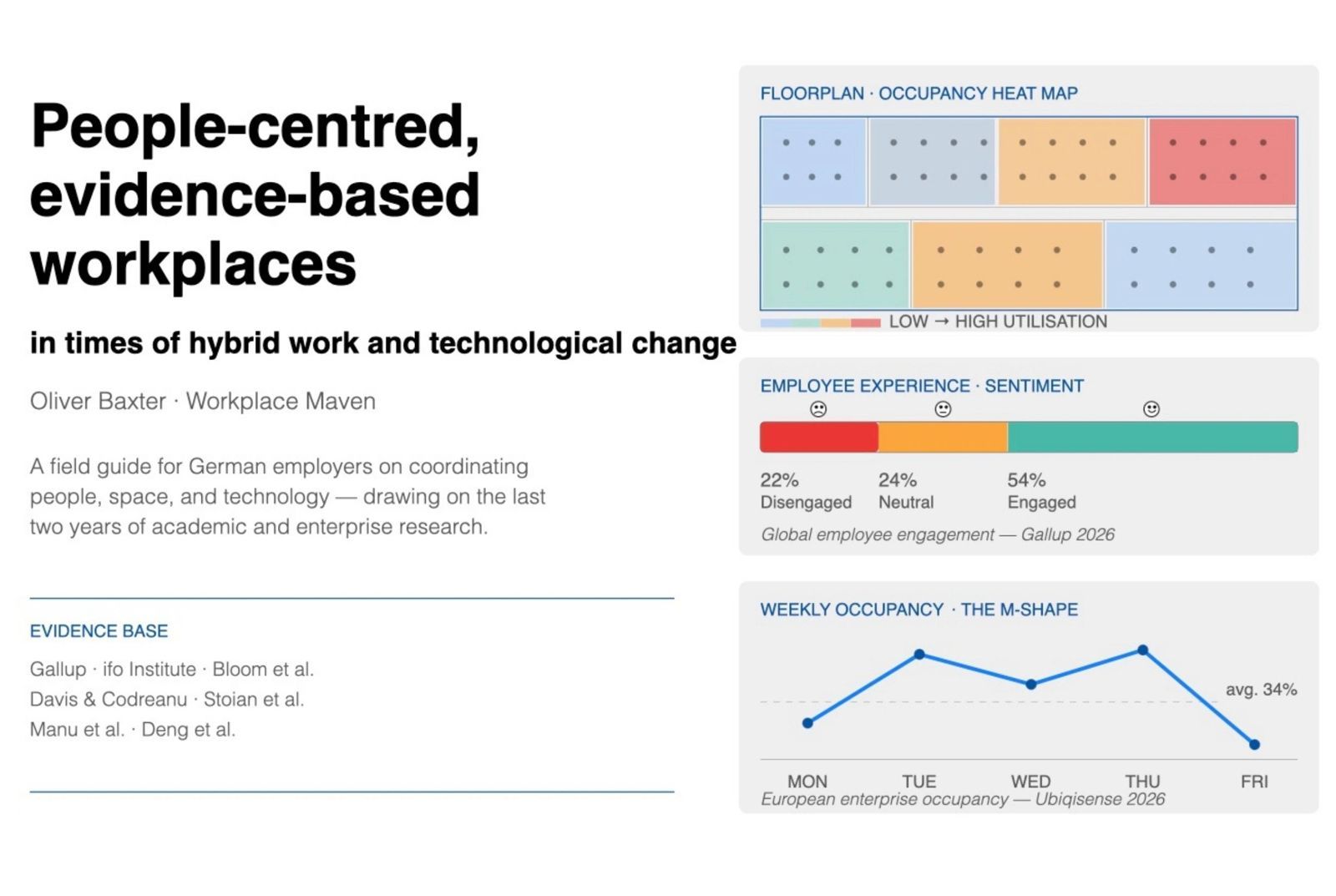

Ask people whether they're satisfied with their office and most will say yes. Ask whether the space helps them do their best work and you'll get a different answer. The two questions sound almost the same. The data says they aren't, and most workplace strategy goes wrong in the gap between them.
Satisfaction is a low bar
Gallup, which runs the largest workplace study in the world, treats engagement as a much higher bar than satisfaction. Satisfaction asks people to grade what's in front of them. Engagement asks whether the environment is drawing performance out of them. A space can pass the first test and fail the second, and most companies never find out because they only ask the first question.
This is why so many expensive refurbishments deliver flat results. A new fit-out gets a satisfaction bump because it's new and people like being in it. Six months on, the novelty has gone, old working habits are back, and nobody has checked whether the layout supports how people concentrate, collaborate or move through the day. The survey measured the wrong moment.
Configuration beats finishes
A 2025 post-occupancy study of a refurbished office found that the biggest driver of perceived productivity, wellbeing and enjoyment was how people could use and arrange the space around them. The quality of the finishes, the furniture and the fit-out had no measurable effect. Two offices can look the same on a floor plan and feel completely different to work in.
That changes what a design brief is for. If spatial configuration is what moves the numbers, the brief should start with how people work, not with a finishes schedule.
What the UAE numbers hide
On the headline figure, the UAE is doing well. Gallup's 2026 data puts UAE engagement at 27%, against 14% for MENA and 20% globally. That's a real advantage, and it's also the kind of number that makes leaders stop asking questions, because the topline looks healthy.
Workplaced's 2025 survey of 1,320 employees across the region (89% of them UAE-based) shows what sits underneath. Workspace satisfaction tracked seniority almost perfectly:
- The C-suite reported full satisfaction with lighting and cleanliness.
- Managers dropped to 46% on noise and privacy.
- Non-managerial staff fell below 25% on most factors.
A single aggregate score would have averaged all of that into something acceptable. It would also have hidden the fact that most of the workforce works in conditions the people approving the office budget never experience themselves.
Why the annual survey can't catch it
A satisfaction survey records how someone feels about a space once a year, after the fact, and that snapshot gets treated as a verdict. Feeling broadly fine about an office and that office supporting your work are different things. Only one of them shows up in the survey.
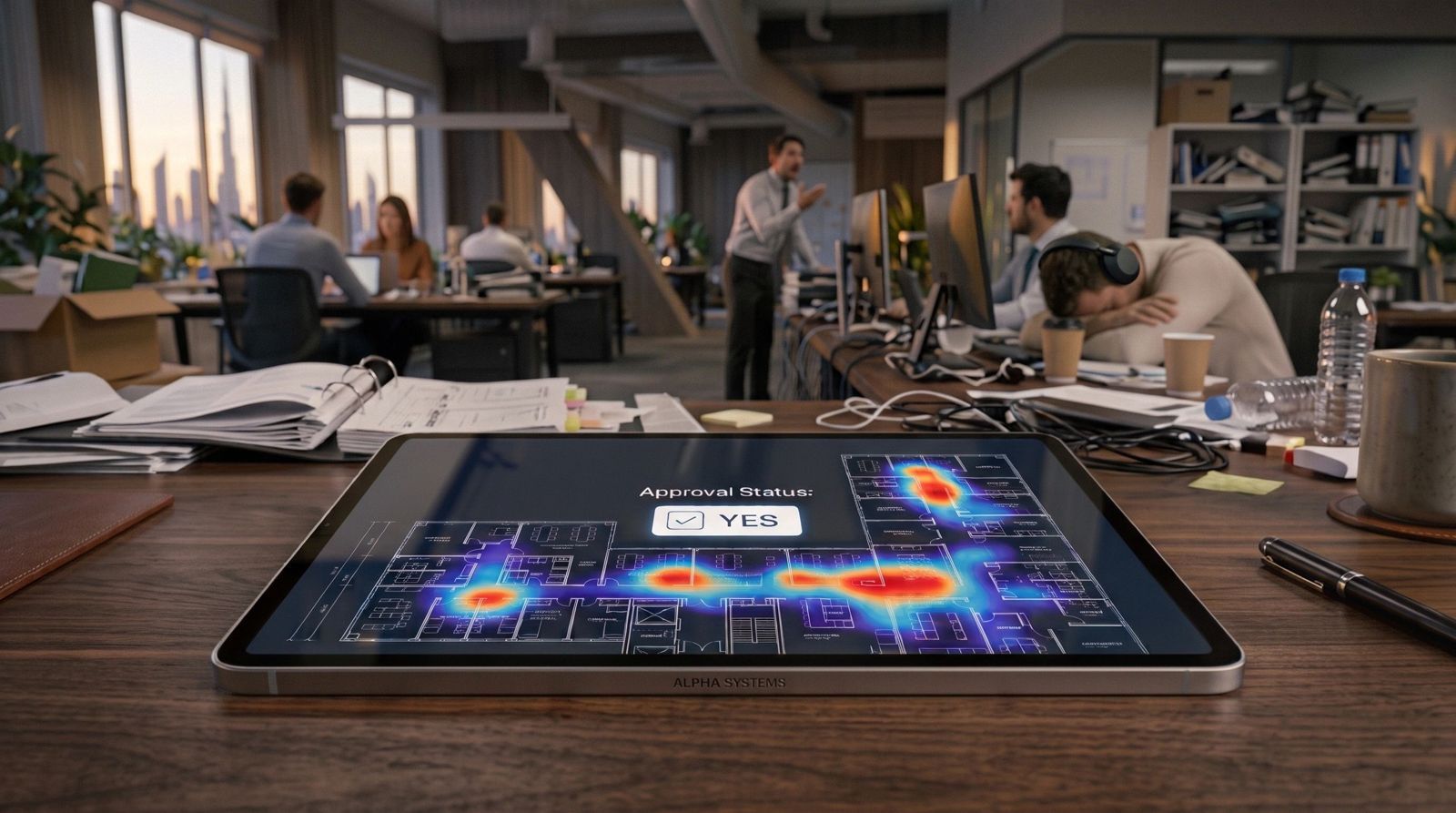
A better question won't fix this. You need different data: how rooms are used hour by hour, which areas sit empty while others overflow, and where people are working around the design instead of with it. That signal is observational and continuous, and it's the only way to tell whether strong engagement is being earned by the workplace or carried by everything else going right.
What to do about it
- Stop using satisfaction scores to sign off space decisions. A high score tells you people aren't unhappy. It doesn't tell you whether the layout, acoustics or room mix match how teams spend their day.
- Look at how space is used before deciding how to change it. Configuration drives outcomes, so the brief should start with observed usage, not a materials budget.
- Treat the gap between engagement and satisfaction as a design input. A strong engagement number is a reason to look closer, not to stop looking.
The best workplaces aren't the ones people say they're satisfied with. They're the ones that keep helping people do their best work, and those aren't always the same office.
This article first appeared on Love That Design. Read the original here.
Sources
- Gallup (2026). State of the Global Workplace 2026.
- Designing Buildings (2025). Post Occupancy Evaluation: operational performance of a refurbished office building.
- Gallup (2026). State of the Global Workplace: United Arab Emirates country-level data.
- Workplaced (2025). Office Environments and Productivity in the Middle East: 2015 vs. 2025.