I opened every session on Humanscale's KSA roadshow with the same question: what matters most to an employee walking into the office? I let the room guess before giving the answer. It's coffee. Second is the chat.
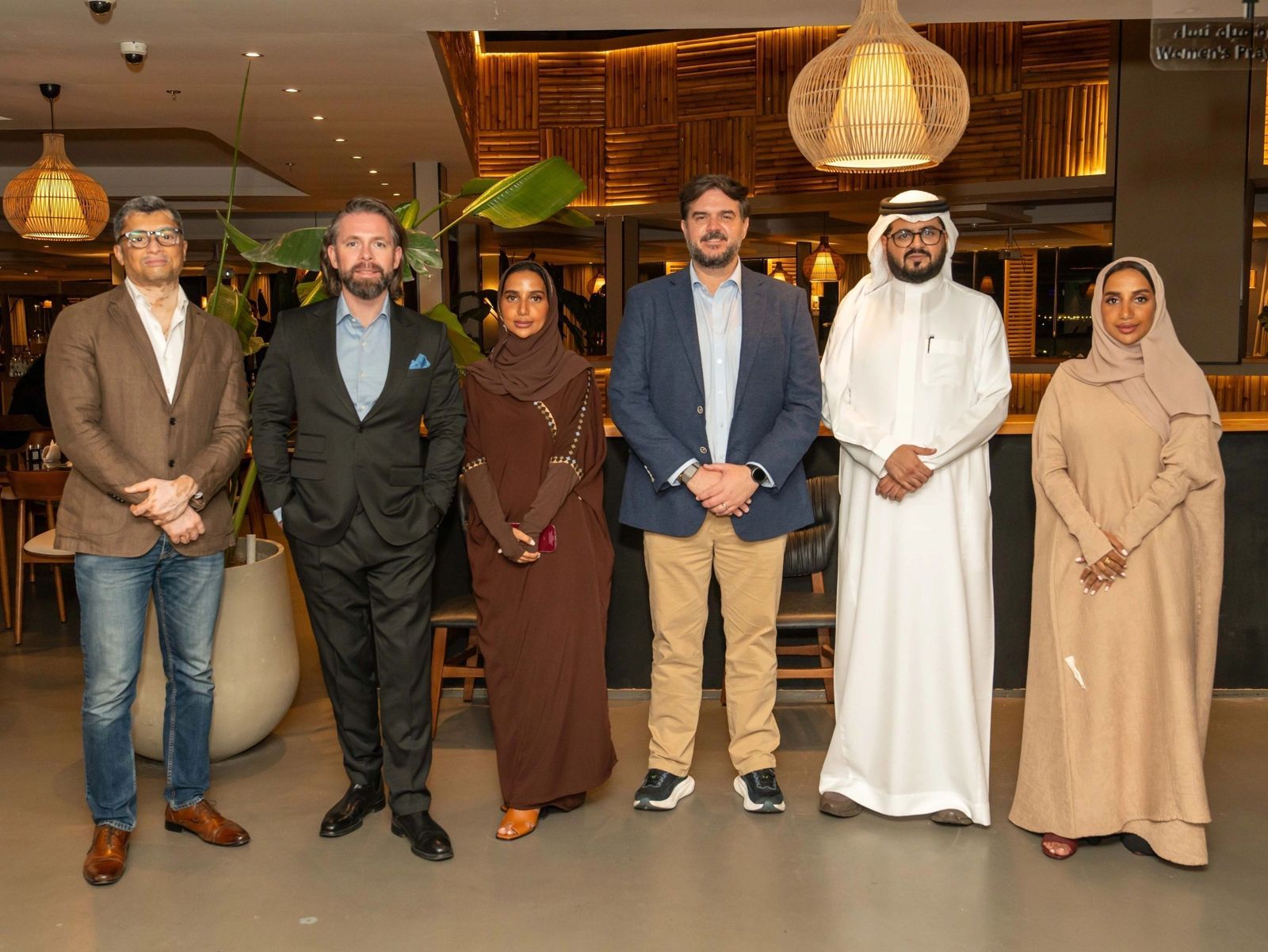
That ranking comes from a fifteen-year dataset covering more than a million respondents in 96 countries, and it set up a week of conversations in Dammam, Riyadh and Jeddah about what Saudi workplaces are actually for. Humanscale ran the tour with Al Juraid, its long-term partner in the Kingdom, which manufactures Humanscale chairs locally. Love That Design coordinated and covered it with Workplace Maven.
The question behind the tour was simple. If people in Saudi Arabia are collaborating more than ever, why do so many of them still want to work remotely?
People are 90% of the cost
I asked each audience what share of a company's operating costs goes on people. Guesses ran from 40% to 75%. The World Green Building Council puts it at 90%, with real estate making up the other 10%. Furniture, the line clients negotiate hardest, is under 1% of the total.
Squeeze the real estate budget to save money and the saving comes straight out of the 90%. Performance drops and people leave.
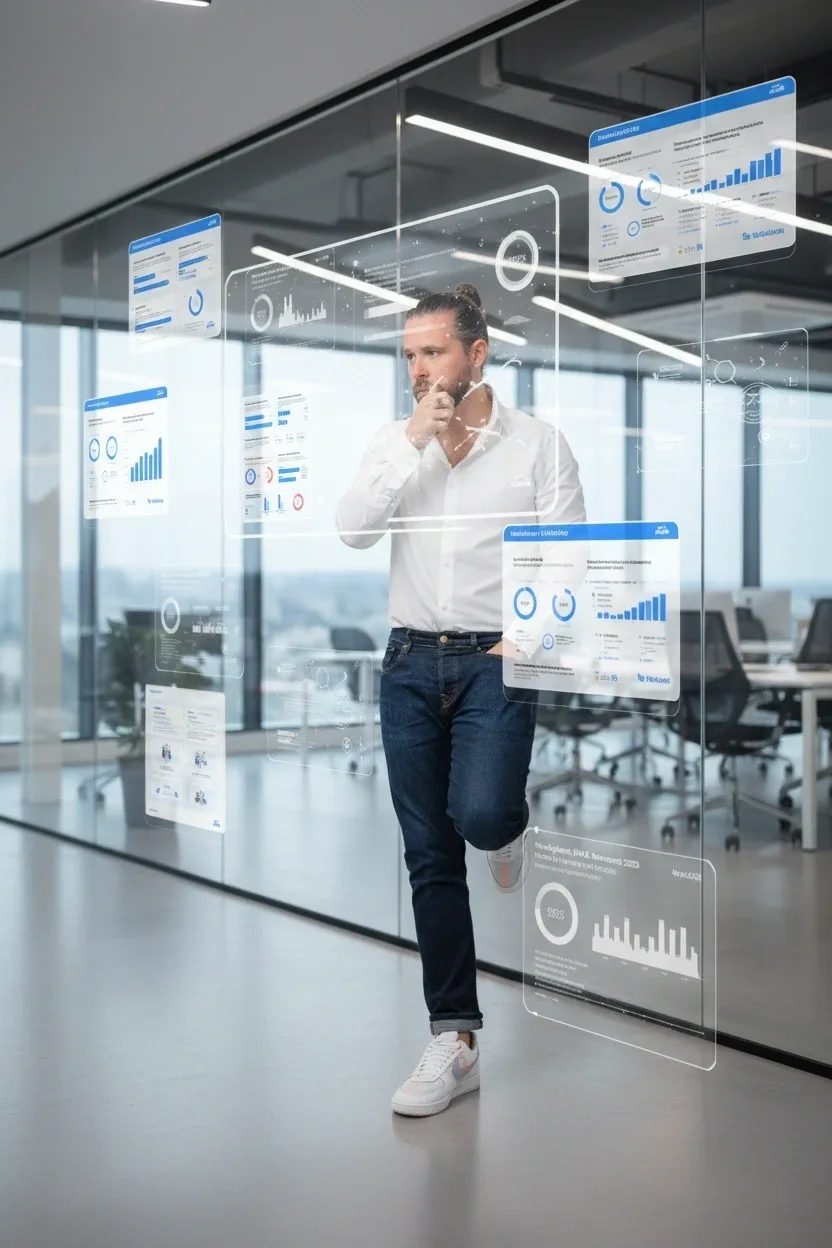
I came to workplace strategy through psychology, and my early career in Oslo was spent treating burnout in people whose offices had been quietly working against them for decades. That's where my rule comes from: if you haven't measured the employees and measured the space, you aren't designing for those employees.
Ten years of change in the region
The research I presented was first run across the region in 2015 and repeated in 2025, which gives a rare ten-year comparison.
- Productivity and performance across the Middle East rose from 52% to 68%.
- Joy rose from 48% to 70%, involvement from 50% to 65%, and pride from 46% to 60%.
- Satisfaction with noise and distraction controls rose by 33 points, and air quality and cleanliness by 25 points each (Covid is the likely reason).
- Ergonomic satisfaction climbed from 60% to 73%.
- Lighting barely moved: artificial lighting up 3 points, natural light up 8.
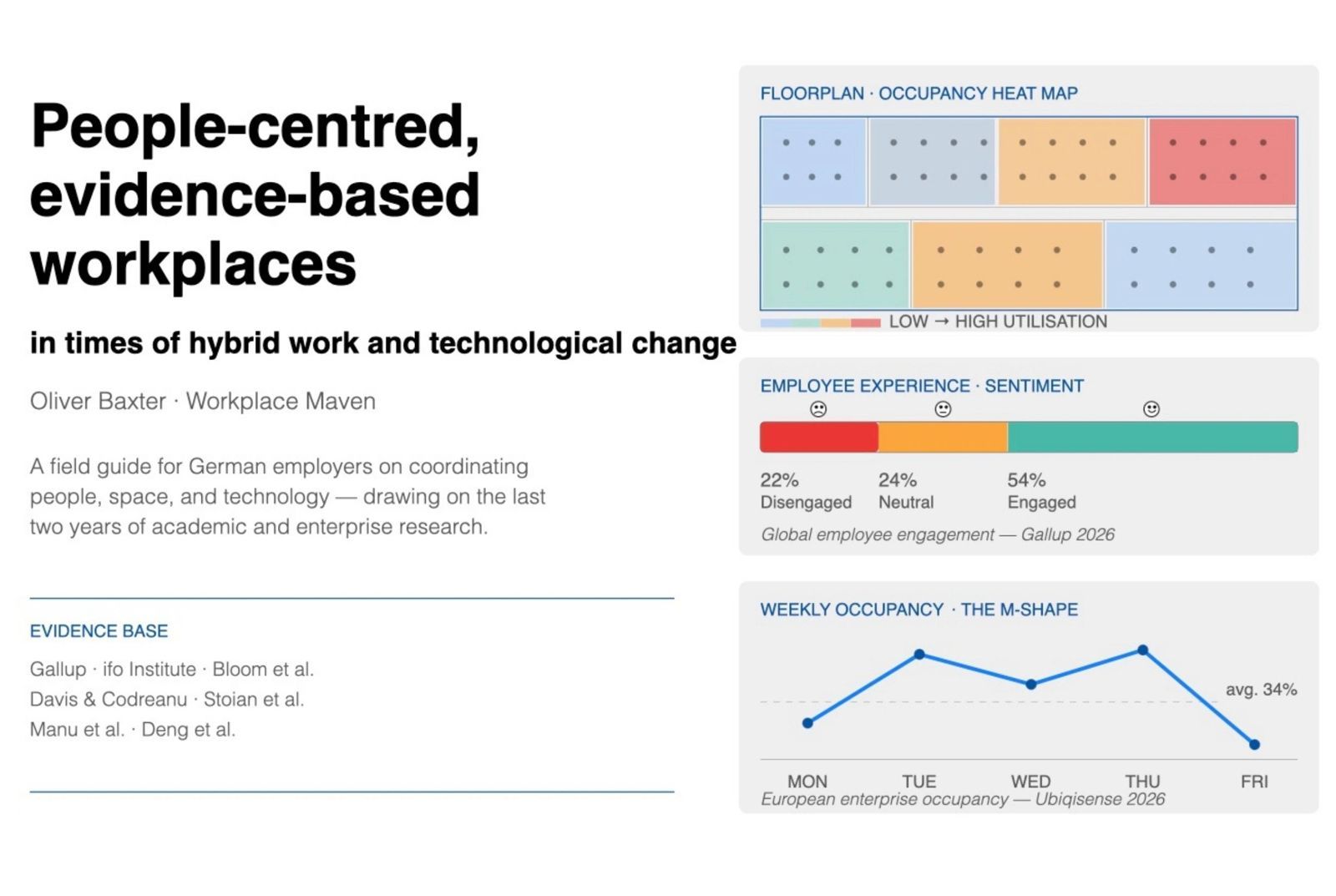
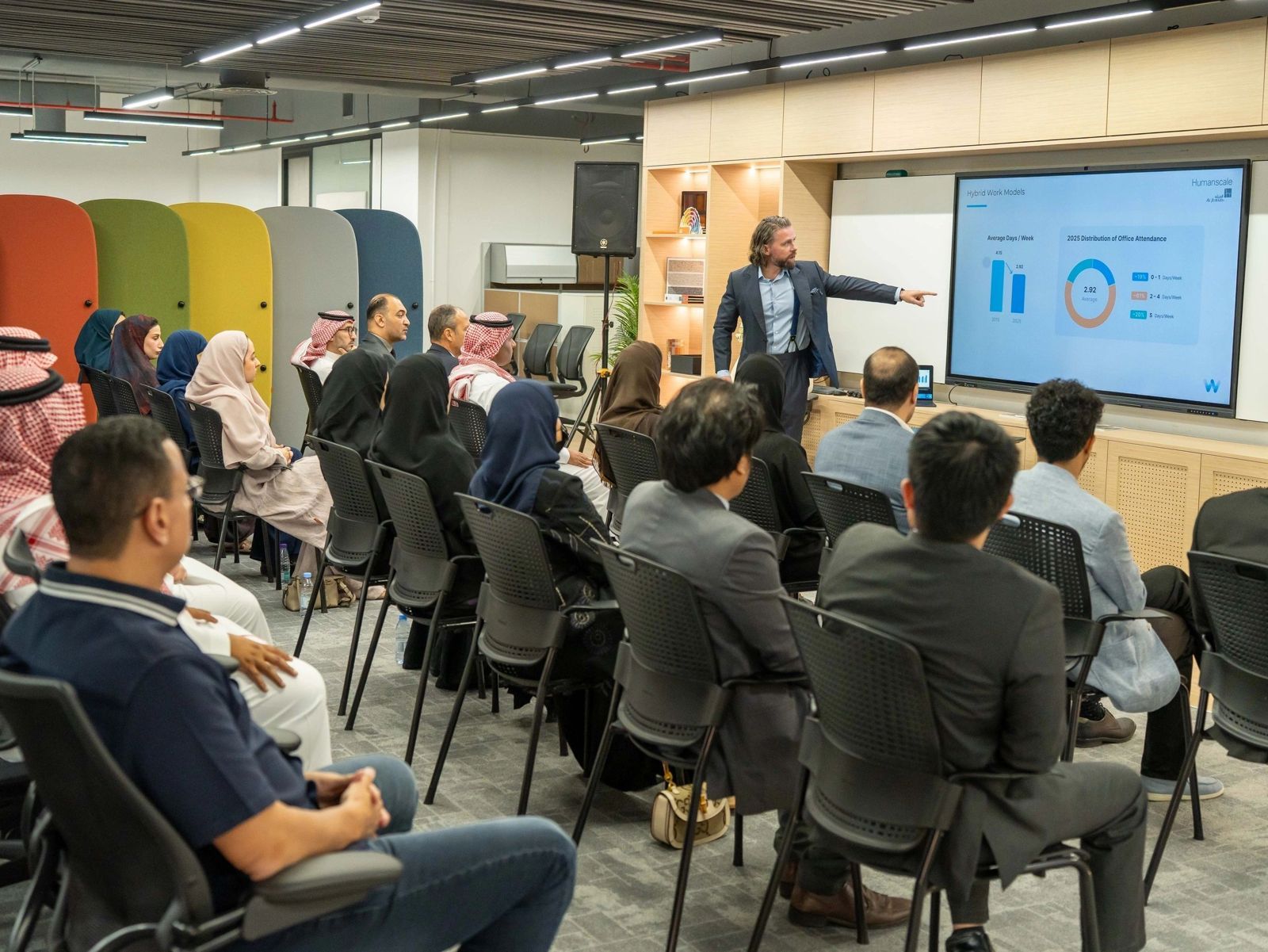
Hybrid working has settled too. In 2015, people in the region worked from home about one day a week. By 2025 it was two, with average office attendance across the GCC at three days.
The Saudi collaboration paradox
Saudi Arabia breaks from that regional pattern in four ways that don't sit comfortably together.
The Saudi workforce reads as more introverted than the rest of the GCC (partly a sampling effect, since the UAE's large expatriate population pulls the regional average towards extroversion). Saudi respondents also collaborate significantly more than their GCC peers and spend more time in the office. And 73% of them would still prefer to work remotely.
The most likely explanation is uncomfortable for anyone who signed off a fit-out: the office isn't designed to support the work people actually do there.
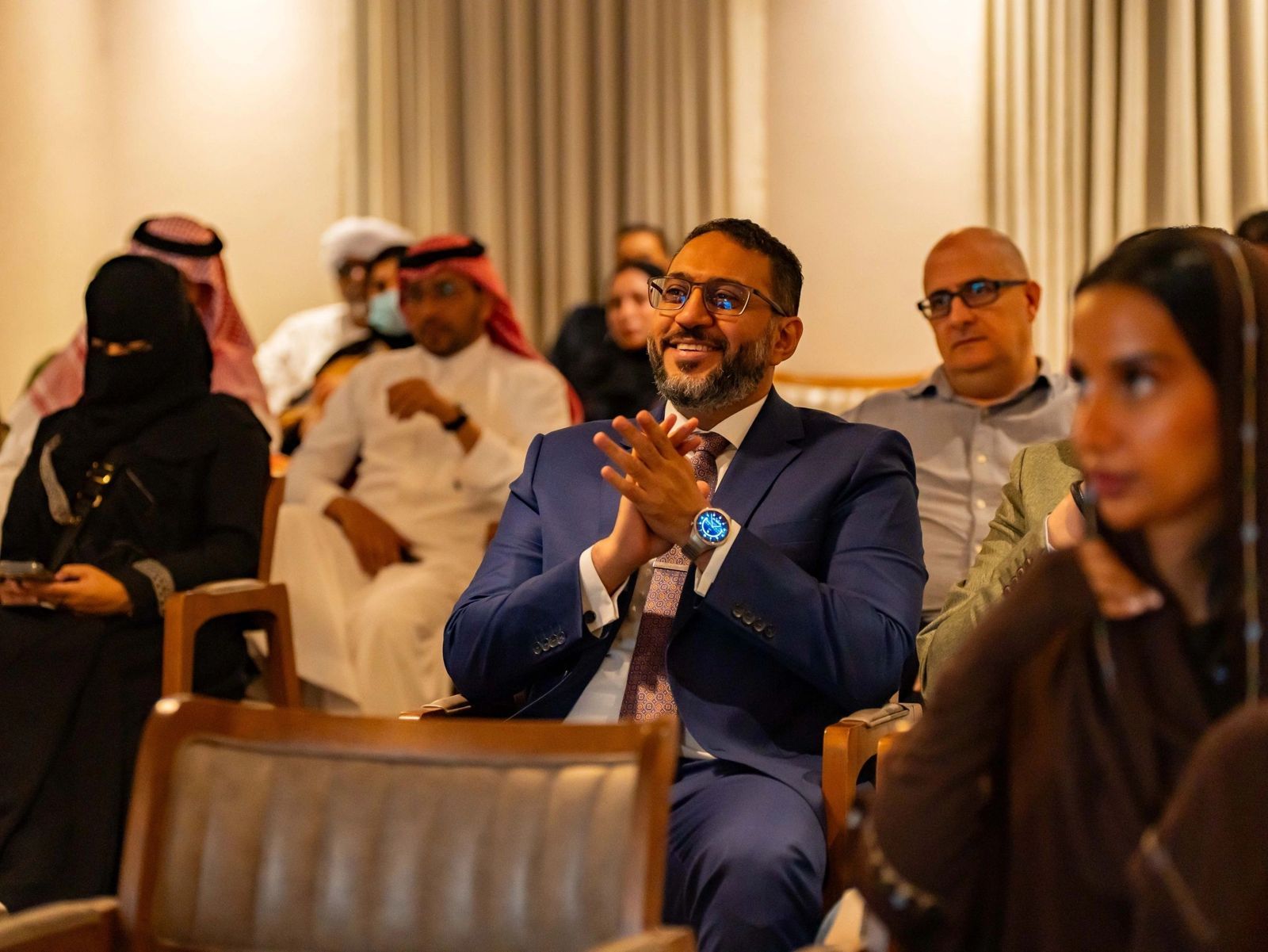
Globally, remote employees are on average 13% to 15% more productive than office-based colleagues, mostly because they get their commuting hours back. In Saudi Arabia, the pull towards remote work splits almost evenly between saving time (33%), saving money (32%) and flexibility (32%).
A workforce the design hasn't caught up with
Female participation in the Saudi workforce has doubled in a decade. Most office design hasn't noticed. Furniture needs to fit every body type, male or female. Footrests are still an afterthought, and restorative spaces such as mothers' rooms, or somewhere a woman can take off her scarf and think without an audience, are still rare. Vision 2030 wants more women in work and wants to keep them there, so this is a retention issue as much as a comfort one.
The generational gap is smaller than people assume. Millennials and Gen Z report 85% trust against 82% for Gen X. Pride sits at 63% for Millennials and 79% for Gen Z. And younger employees don't simply prefer working from home: many lack the space or budget for a decent setup at home, and they need face time in the office to build a career.
Redesigning for the mismatch
If the office was built for a workforce that no longer matches the people in it, the fix is to plan space around how it's actually used.
- Meeting rooms are usually sized for far more people than the three to five who typically use them.
- Phone booths meant for focus work have become so cramped that I call them coffins.
- Private offices that sit empty under one person's name can become bookable space.
- For desk ratios, plan for 80%. You need fewer desks and chairs than you think.
None of this makes the office smaller. Done properly, it cuts a client's furniture spend by an average of 28%.
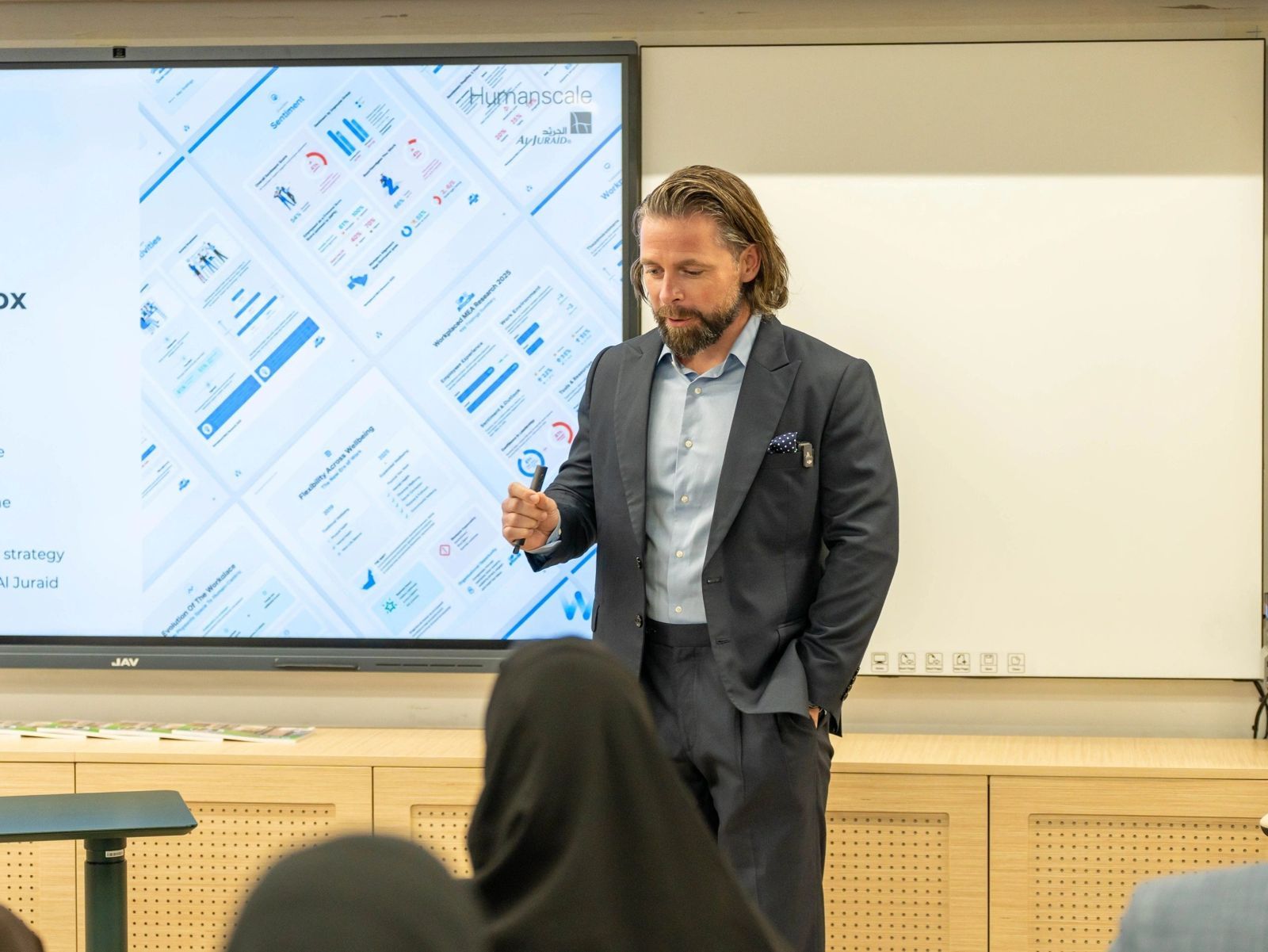
One question from the floor has stayed with me. An attendee argued that a proper home-cooked lunch drives remote-work preference as much as anything on my slides. I think that's underweighted in most workplace research, and Google's cafeteria model shows what happens when food is used deliberately to bring people back into a building.
Measure first, then design
Frazer Butcher closed the evening for Humanscale with the Al Juraid partnership: chairs made in the Kingdom, a shorter supply chain and fewer shipping delays, in line with Vision 2030's localisation and sustainability goals. Al Juraid was recently one of sixteen manufacturers chosen from ten thousand applicants for a government-backed programme.
Humanscale was founded in New York in 1983 on the idea that furniture should adjust to the person, not the other way round. Niels Diffrient studied X-rays of how people sit for years before designing the Freedom chair, and his Diffrient World chair reclines using only the sitter's body weight, with two manual adjustments. That's the same order of operations I'd want from any Saudi workplace project: measure first, then design.
Love That Design covered the roadshow in full. Read their write-up here.